
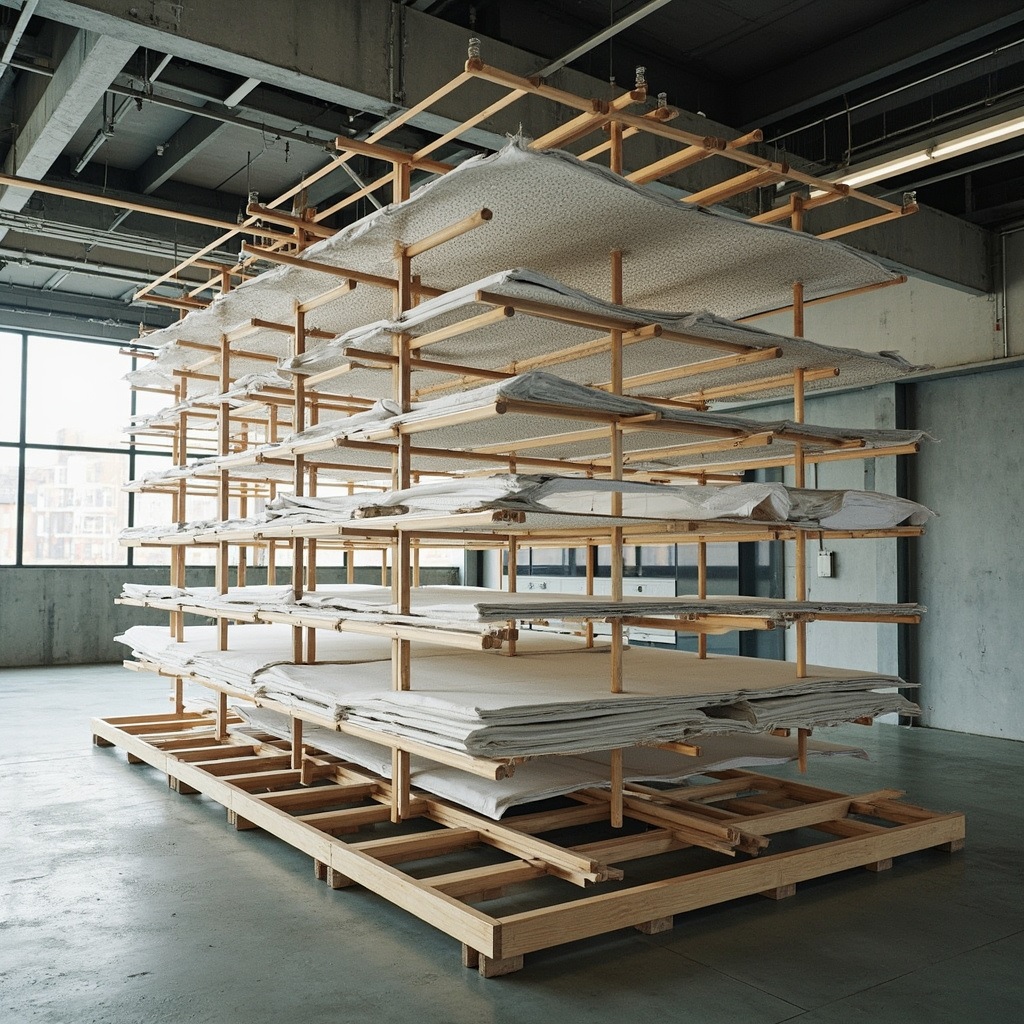
 Let’s be honest: Aluminum Alloy Clothes Drying a heavy winter quilt is a pain. You wrestle it into the washing machine, pray it doesn’t turn into a wet cement block, and then face the real nightmare—drying it. You drape it over a chair and it slides off. You hang it on a line and it sags, dragging the pole down. You buy a flimsy floor rack and watch it wobble like a drunk toddler the second you lay the wet fabric on it. That’s not just annoying. That’s a design failure.
The problem isn’t the quilt. It’s the rack. And the core issue? Terrible center of gravity.
Most manufacturers slap together some aluminum tubes, throw on a crossbar, and call it a day. They forget that a soaked duvet can weigh upwards of fifteen pounds. That’s a lot of mass sitting high above the floor. When the center of gravity is too high or too far forward, the rack becomes a lever. A slight nudge, a gust of wind, or even the uneven weight of the quilt itself turns your drying station into a toppled mess.
That’s why we engineered our heavy quilt-drying floor rack with a ruthless focus on stability physics.
We dropped the center of gravity. Hard. Instead of a narrow, top-heavy triangle, our base uses a wide, low-profile stance. The legs extend outward further than industry standard, creating a footprint that anchors the rack like a bulldog. We also shifted the pivot point of the main support arm backward. This isn’t an accident. It’s geometry. By moving the vertical load closer to the rear legs, the rack doesn’t want to tip forward when you load the front bars. It wants to sit down and stay put.
But we didn’t stop at the base. We looked at the material density. Most racks use thin, hollow tubing to save pennies. That’s a mistake. Hollow tubes flex. Flex equals wobble. We use a thicker gauge steel with a slightly heavier wall. That extra mass isn’t dead weight—it’s ballast. It pulls the entire system’s center of gravity lower and keeps the rack rigid under load. When you hang a heavy, wet quilt, the rack doesn’t groan or sway. It locks in.
Here’s the kicker: we designed the crossbars to be adjustable, but we locked the geometry so the load stays centered. You can spread the quilt wide, but the weight distribution remains balanced over the stable base. No leaning. No creeping. No sudden crashes at 3 AM.
You don’t buy a drying rack just to hold fabric. You buy it to solve a problem. The problem is that heavy quilts fight back. They’re bulky, wet, and awkward. Your rack needs to be heavier, wider, and smarter than the load. That’s what stability engineering delivers.
Don’t settle for a rack that tips over the first time you hang a real blanket. Get one that knows where its center of gravity lives. Your floors—and your sanity—will thank you.
